

Preferential Pension for Hammer and Press Operators in Ukraine
The metallurgical industry plays an important role in Ukraine’s economy. Given the difficult and hazardous working conditions in this sector, Ukrainian legislation provides certain social guarantees for employees, including the right to retire earlier under preferential pension conditions. This article explains the pension rights of workers employed as hammer and press operators.
Among the occupations that may qualify for a preferential old-age pension are hammer and press operators. These workers operate steam, steam-air and pneumatic forging hammers with falling parts weighing up to 1.5 tonnes.
Due to the particularly difficult and hazardous nature of their work, such employees may qualify for an early retirement pension. Workers whose employment falls under List No. 1 may generally retire at the age of 50, provided that the statutory requirements concerning their insurance record and preferential service are satisfied.
In particular, men generally need at least 25 years of total insurance record, including at least 10 years of employment under particularly hazardous and difficult working conditions. For women, the required preferential service is at least 7 years and 6 months, subject to the applicable statutory requirements concerning their total insurance record.
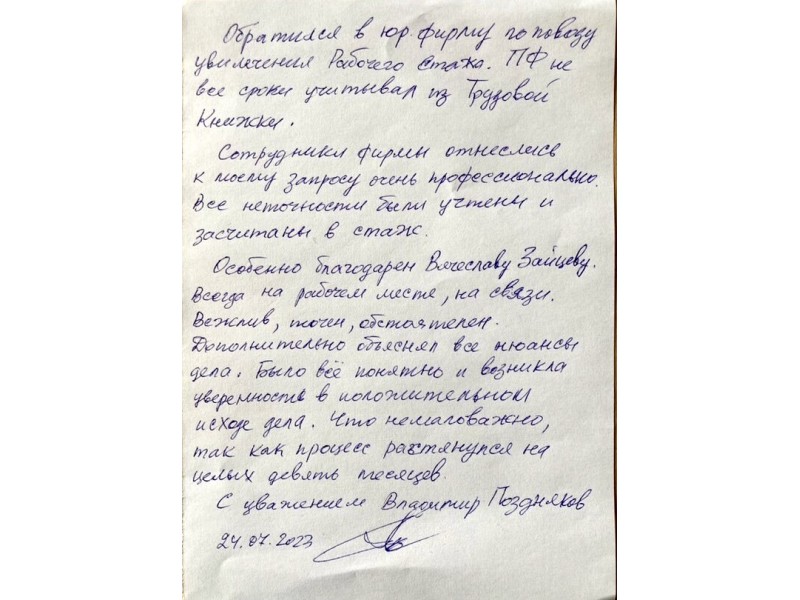
In practice, however, the Pension Fund of Ukraine may refuse to include certain periods of employment in a person’s preferential service record because of formal deficiencies in employment documents. Common problems include the absence of an employer’s stamp in the employment record book, missing signatures of responsible officials, incorrectly completed entries or corrections made in the employment record book.
Such formal deficiencies may result in the Pension Fund refusing to recognise a period of employment as part of the worker’s insurance or preferential service record and, consequently, refusing to grant a preferential pension.
However, a refusal by the Pension Fund does not necessarily mean that the worker has lost the right to an early retirement pension. If the employment actually took place and can be supported by appropriate evidence, the disputed period may be confirmed and recognised through court proceedings.
Therefore, if the Pension Fund of Ukraine refuses to recognise your preferential service because of errors, missing stamps, signatures or other deficiencies in your employment documents, such a decision may be challenged before an administrative court. Depending on the circumstances of the case, it may be possible to obtain recognition of the disputed period of employment and secure the granting of a preferential pension.