

Preferential Pension for Hot-Dip Tin-Plating Operators
Pension provision is one of the most widely discussed social issues. This is largely due to the bureaucratic nature of pension procedures and the relatively low level of legal awareness among citizens.
Current Ukrainian legislation distinguishes between different types of pensions and establishes specific eligibility requirements for each of them. In this way, the state seeks to take into account a person’s working conditions, the importance of the occupation to the country, occupational risks to life and health, and other relevant factors.
For example, an ordinary person may retire upon reaching the age of 60 and having at least 28 years of insurance record (for retirement in 2021). However, a hot-dip tin-plating operator may be entitled to retire earlier due to the hazardous working conditions associated with this occupation.
In particular, a hot-dip tin-plating operator loads sheet metal into the magnetic feeder of the tinning unit, adds oil to the bath of the tinning unit and monitors the oil temperature, performs the manual tinning of simple parts and products in the bath, prepares materials for tinning, cleans and pickles parts before tinning, determines the readiness and quality of the tin coating by visual inspection and mechanical methods, and washes and dries parts after tinning, among other duties.
Due to these working conditions, a hot-dip tin-plating operator may retire upon reaching the age of 50, provided that the worker has at least 25 years of insurance record (20 years for women), including at least 10 years (7 years and 6 months for women) of employment as a tin-plating operator or in another occupation qualifying for preferential pension treatment under the relevant statutory list.
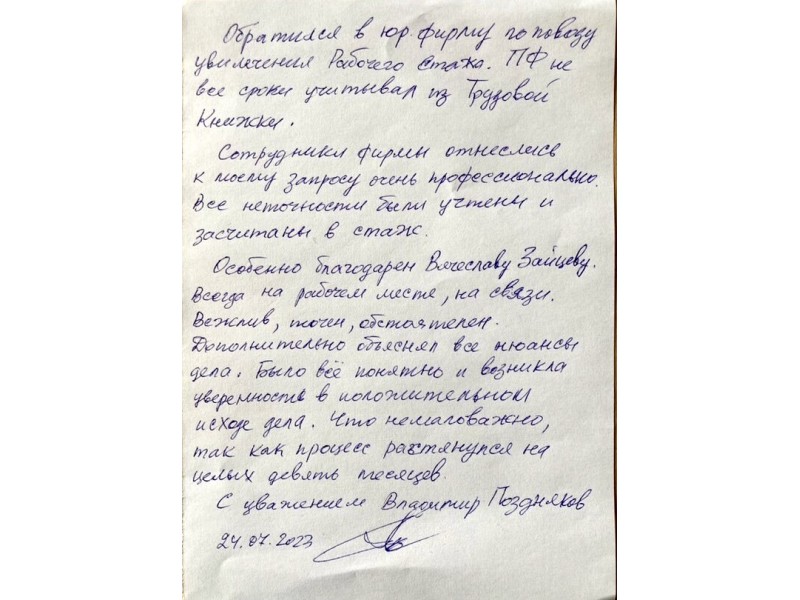
It should be noted that many people encounter difficulties in confirming their preferential service record. This is usually related to errors or deficiencies in entries in the employment record book. In such cases, it may be necessary to obtain a clarifying certificate confirming the relevant employment period from the employer or an archival institution. However, employees of the Pension Fund sometimes require such certificates even when the employment record book has been properly completed and there is no actual need for additional confirmation. If the applicant is unable to provide the requested certificate, the Pension Fund of Ukraine may issue a decision refusing to grant the pension.
To resolve such a dispute, it is important to consider the relevant court practice. Ukrainian courts have developed a consistent approach: if the entries in the employment record book make it possible to establish the preferential nature of the work performed, a requirement to provide an additional certificate confirming the service record may be unlawful.
After receiving a decision refusing to grant a pension, one of the first steps should be to consult a lawyer or attorney who can assess whether the refusal is lawful and recommend the most appropriate course of action for obtaining the pension.