

List No. 1 Pension for Weigh-Car Operators in Blast-Furnace Production
Ferrous Metallurgy, Blast-Furnace Production: Weigh-Car Operators Working in Tunnels and Under-Bunker Areas
Every profession has its own difficulties, but certain types of work involve particularly harmful and difficult working conditions. Ukrainian legislation therefore provides special pension rules for employees whose professions and positions are included in List No. 1 and List No. 2. Jobs included in List No. 1 generally involve particularly harmful and particularly difficult working conditions. One such category includes weigh-car operators working in tunnels and under-bunker areas in blast-furnace production.
Employment in a profession covered by List No. 1 may provide the right to an old-age pension on preferential terms before reaching the general retirement age. Eligibility depends on the person's age, total pensionable insurance service, duration of preferential service and confirmation that the relevant employment falls within the statutory list applicable to the period of work.
In particular, Ukrainian pension legislation establishes separate requirements concerning total pensionable service and the minimum duration of employment under particularly harmful and particularly difficult working conditions for men and women. Therefore, the right of a weigh-car operator to a preferential pension should be assessed individually on the basis of the person's employment history and applicable legislation.
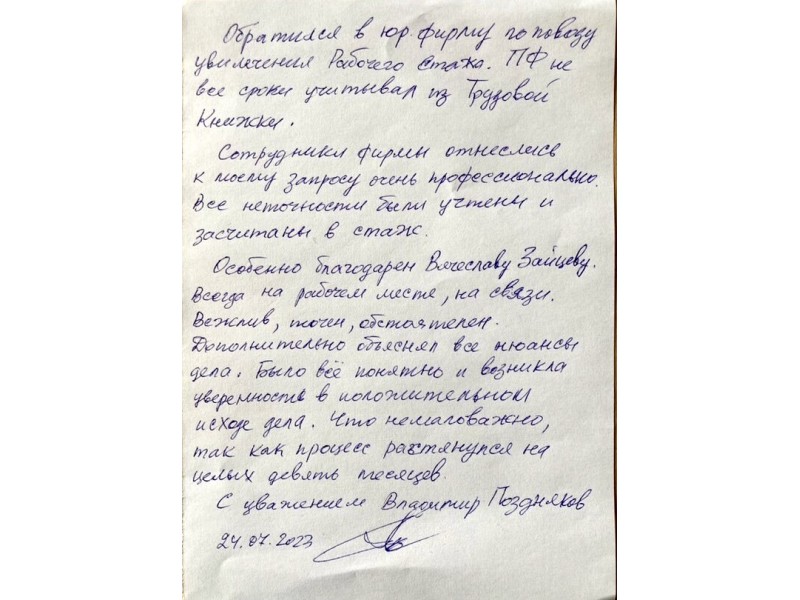
Although the procedure for applying for a preferential pension may appear straightforward, in practice applicants whose professions are included in List No. 1 frequently encounter difficulties when the Pension Fund of Ukraine verifies their preferential service.
One of the main documents used to confirm periods of employment is the employment record book. Problems may arise where old employment records contain corrections, inaccuracies, incomplete job titles, missing signatures or other deficiencies. In such cases, the Pension Fund may refuse to include a particular period in the applicant's preferential pensionable service.
The Pension Fund may also request a clarifying certificate confirming preferential employment where the information contained in the employment record is insufficient to establish the nature of the work performed, the relevant profession or position, or other circumstances necessary to determine whether the employment qualifies under List No. 1 or List No. 2.
Another common reason for disputes is the absence or improper conduct of workplace certification. The Pension Fund may refuse to recognize a period as preferential service where the required workplace certification was not carried out by the employer. However, the employee is not responsible for the employer's failure to comply with its statutory obligations concerning workplace certification.
An important example of Ukrainian court practice is the judgment of the Supreme Court of Ukraine of 19 February 2020 in case No. 520/15025/16-а. The dispute concerned the recognition of preferential service where workplace certification had not been properly conducted.
The Supreme Court concluded that responsibility for conducting workplace certification rests with the employer rather than the employee. Consequently, the employer's failure to conduct workplace certification, or its failure to conduct it within the required period, should not by itself deprive an employee working in harmful conditions of the constitutional right to social protection and a preferential old-age pension, provided that the relevant working conditions can be established by appropriate evidence.
Therefore, if the Pension Fund of Ukraine refuses to grant a List No. 1 preferential pension to a weigh-car operator because of problems with employment records, clarifying certificates or workplace certification, such a refusal should be carefully analyzed. Where the refusal is unlawful, the Pension Fund's decision may be challenged before an administrative court with reference to the applicable legislation and relevant Supreme Court case law.